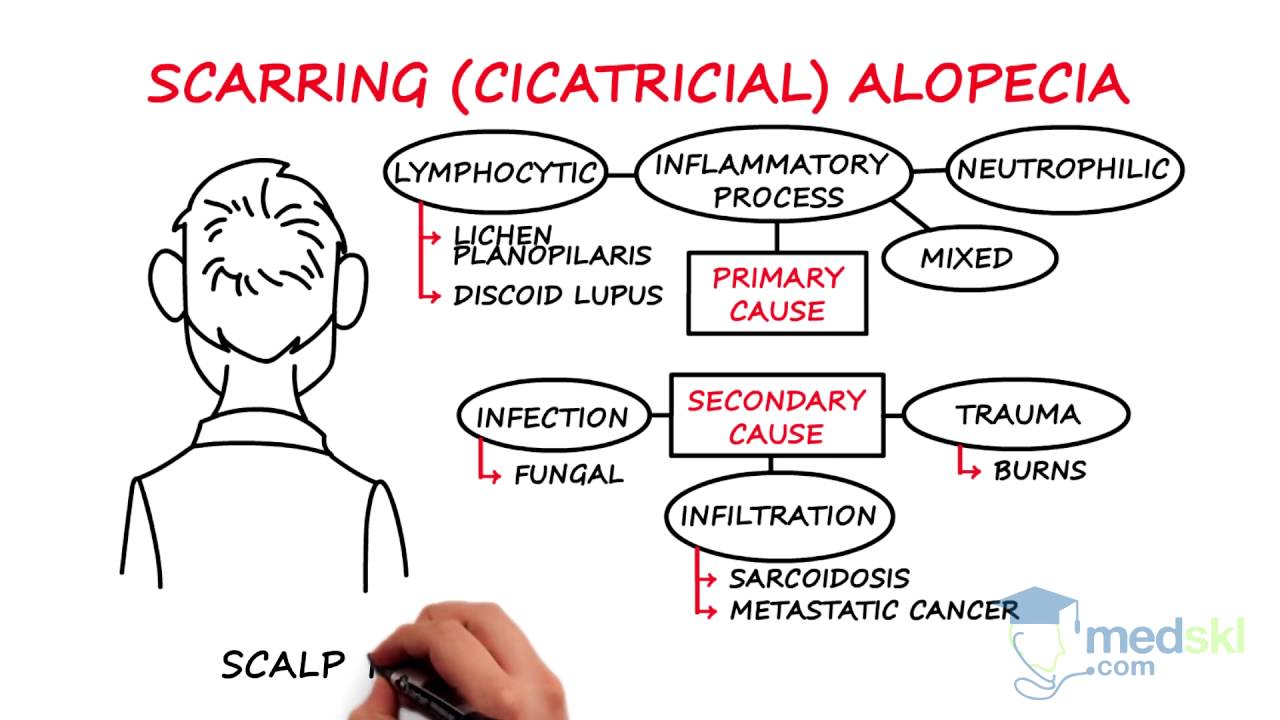
medskl.com is a free, global medical education site (FOAMEd) covering the fundamentals of clinical medicine with animations, lectures and concise summaries. medskl.com is working with over 170 award-winning medical school professors to provide content in 200+ clinical presentations. Dermatology – Alopecia: What You Need to Know Whiteboard Animation Transcript with Najwa Somani, MD https://medskl.com/Module/Index/alopecia Alopecia, or hair loss, can be broadly classified as scarring or non-scarring. In non-scarring alopecia, there is little to no inflammation or (as in alopecia areata) inflammation is directed at the non-permanent, cycling portion of the hair follicle (below the bulge – stem cell region). Scarring alopecia (aka cicatricial alopecia) is characterized by damage to the stem cell (bulge region) of the hair follicle resulting in fibrosis and permanent hair loss. Early dermatologic referral is imperative to prevent ongoing irreversible hair loss. Cicatricial alopecias are classified as primary or secondary. • In PRIMARY cicatricial alopecia, an inflammatory process specifically targets the hair follicle. These alopecias are classified according to the predominant inflammatory cell type and include entities such as lichen planopilaris and discoid lupus. • SECONDARY cicatricial alopecias involve infiltrative or inflammatory processes where the hair follicle is damaged secondarily. A scalp biopsy helps to guide optimal treatment. Depending on the subtype of cicatricial alopecia, clinically, one may see scar with loss of follicular ostia, tufting (where multiple hair fibers exit one ostia), erythema, scale, pustules, and sinus tracts. The main sub-types of non-scarring alopecias to be aware of are as follows: 1. Androgenetic alopecia is hormonally driven and presents with patterned hair loss. Topical minoxidil, antiandrogenic medications, and hair transplantation are typical treatments 2. Telogen effluvium is characterized by increased hair shedding and reduced hair density resulting from increased numbers of hairs shifting into a resting or telogen phase. Malnutrition, medications, endocrine abnormalities, and stress precipitate this shift. Management should address the underlying cause. 3. Alopecia areata is an autoimmune disorder presenting with smooth bald patches of hair loss on the scalp and sometimes on other body parts. Loss of all body hair is called alopecia universalis. It can be associated with other autoimmune disorders. Management includes topical and systemic immunomodulatory agents. Relapses are not infrequent. 4. Physical alopecias result from trauma to the hair follicle. This may be the consequence of traction from hairstyling practices, or due to an impulse-control disorder called trichotillomania, where individuals have a compulsion to pull out their hair. Patient education is key to management. Pharmacotherapy such as SSRIs may be required for trichotillomania.
Dermatology – Alopecia: By Najwa Somani M.D.
You Might Also Like

Best Foods for Fever | Healthy Recipes
Rowing Video – 2
Diabetes Minute: Using a Glucagon Emergency Kit (20)
Thyroid System Animation
How to Do a Squat | Gym Workout
? Why Alcohol Is Killing Your Sex Drive, Lowering Your Testosterone & Making You Fat
How to Reduce Bad Cholesterol
3D Animation of Internal Organs
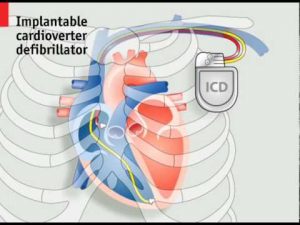
How pacemakers work | The Economist

Top Vegan Protein Sources (Plant-Based) | Dr. Berg
Understanding Heart Disease (Heart Basics #1)
Supplements Video – 5
Vitamin Complex that By Itself Can Fix Your Depression

Community Psychology Video – 4
TOP 10 HIGH PROTEIN VEGETARIAN FOODS FOR BODYBUILDING
Orlistat: Dosis para comer grasas (sin engordar)
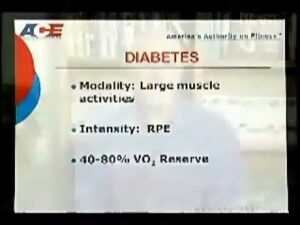
Special Population Exercise Video – 2

Some serious side effects of Metformin
What Is Heart Failure? | Heart Disease
Pediatric Surgery Video – 3

Keto Diet, Keto Foods, Keto Recipes Video – 21

What is PHARMACEUTICAL DRUG? What does PHARMACEUTICAL DRUG mean?
Thyroid Hormone 1 – Control
Flat Bench Press Dumbbell-3
What makes muscles grow? – Jeffrey Siegel

Canoeing Video – 1
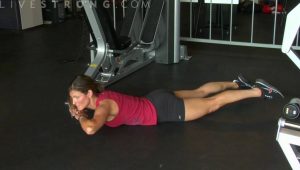
How to Do Back Extension Exercises
Stretching | Warm Up Before & After Exercise

Amazing!!!! Weight loss Transformations From Fat To Strong FIT Muscular Body

Yoga Guide Video – 4
Protein Foods Video – 2
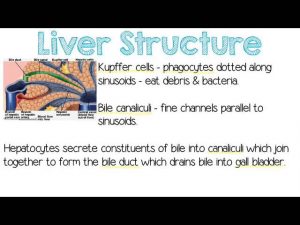
The Liver and Excretion – Quick A Level Biology

Bodybulding -90kg SM Lahti 2016 freeposing
Urology Surgery Video – 5

Is Whey Protein SAFE at Age under 18 | Guru Mann | Health & Fitness
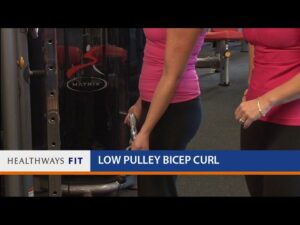
Low Pulley Bicep Curl

BEST MEAL PREP FOR FITNESS | CHEAP & EASY HIGH PROTEIN MEALS

Propranolol information burst
Fat Loss, Weight Loss Video – 13

Spa History Video – 2
Liver Biopsy