
In this video I discuss what is metabolic rate, how to calculate metabolic rate, and how to calculate calories burned, and how many calories burned in a day. I also discuss basal metabolic rate, and resting metabolic rate. Transcript (partial with notes) In this video, I am going to show you the formula on how to calculate your calories burned in a day (metabolic rate). And give some examples. Lets start off with the term metabolic rate. In this video we are defining metabolic rate as the amount of calories you would burn off in a day (24 hours) while at rest. So, not moving around or being active. In the fitness community, There are 2 popular formulas to calculate this. BMR, basal metabolic rate, and RMR, resting metabolic rate. BMR is taken after 8 hours of sleep and 12 hours of fasting. RMR is taken under less restrictions, and has been shown to be statistically more accurate. Lets look at a couple of examples. Here we have kyle and Samantha, and their metrics are here. Kyle is 44 yrs old, is 5’8” tall, and weighs 160 pounds. Samantha is 33 yrs old, 5’4” tall, and weighs 126 pounds. The RMR equation for men is (4.55 x Weight in pounds) + (15.88 x Height in inches) – (5*age) + 5, for women the equation is (4.55 x Weight in pounds) + (15.88 x Height in inches) – (5*age) -161. When we plug in Kyle’s and Sam’s #’s, we see that Kyle’s RMR is 1592.84 cal/day, and Sam’s is 1263.62 cal/day. So, after rounding up, this tells us that if Kyle and Sam were to sit around all day, they would need 1583 and 1264 calories per day to maintain their weights. We know that neither Kyle or Samantha are going to sit around all day. So there is a multiplication factor that we must use next. It is based on each of their lifestyles. The factor is as follows… • 1.200 = sedentary (little or no exercise) • 1.375 = lightly active (light exercise/sports 1-3 days/week, approx. 590 Cal/day) • 1.550 = moderately active (moderate exercise/sports 3-5 days/week, approx. 870 Cal/day) • 1.725 = very active (hard exercise/sports 6-7 days a week, approx. 1150 Cal/day) • 1.900 = extra active (very hard exercise/sports and physical job, approx. 1580 Cal/day) Lets say Kyle is very sedentary, so if we multiply his RMR by 1.2 we have ….1911.6 cal/day. Now, Samantha is in the very active category, so we need to multiply her RMR by 1.725, and we get…2180.4 cal/day . So, based on these calculations Kyle can consume 1912… calories per day to maintain his current weight, and Samantha can consume …2180 calories per day to maintain her weight. Now, You can use the RMR equation and lifestyle multiplication factor to calculate your baseline. Drawbacks… A few of things I need to mention. First, this and any other formula used to calculate your metabolic rate is just an estimate. There is a margin for error. Second, muscle mass is very important. Lets look at Kyle, and Jack, who both weigh the same. However, Jack has much more muscle mass than K, since muscle burns more calories than fat, J will have a higher metabolic rate. Third, the type of diet ( for example consuming whole vs processed foods) is not factored either. Bottom Line I don’t believe that counting calories is a path to successfully sustaining weight loss in the long run. However, Using the RMR formula and the lifestyle multiplication factor is extremely helpful in increasing your awareness to how many calories you need to consume per day. Which In turn can lead to a higher awareness of how quickly calories you consume add up. Other sources… http://www.scientificpsychic.com/health/cron1.html http://www.ncbi.nlm.nih.gov/pubmed/15883556

Nutritional Physiology & Biochemistry Video – 2
You Might Also Like
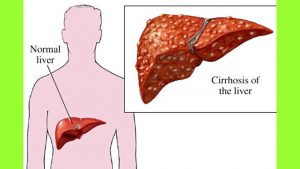
How To Cure Liver Cirrhosis Naturally | Liver Cirrhosis Natural Treatment | Liver Cirrhosis Diet

Anabolic Steroids – History, Definition, Use & Abuse Video – 12
![Read more about the article [Preview] What really causes heart disease?](https://videos.drmaheshkumar.com/wp-content/uploads/2021/05/Preview-What-really-causes-heart-disease-300x225.jpg)
[Preview] What really causes heart disease?

Fat Loss, Weight Loss Video – 25
How do carbohydrates impact your health? – Richard J. Wood

Muscular Strength Asanas Video – 6

Hormones, body mass, and obesity

Swollen Liver Warning Signs

Hematology Video – 1

Sports Medicine Video – 5
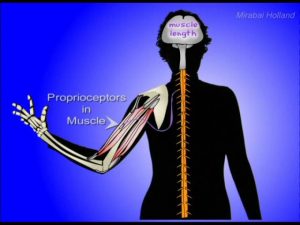
STRETCH MECHANICS by Mirabai Holland
Human Male and Female Complete Anatomy – Body, Muscles, Skeleton, Internal Organs and Lymphatic 3D M

Proper Deadlift Setup (How to Nail it EVERY TIME!)

What To Eat During Exercise

What is LACTATION FAILURE? What does LACTATION FAILURE mean? LACTATION FAILURE meaning & explanation

What Is The Definition Of Gynecomastia – Medical Dictionary Free Online Terms

Cuban weightlifting Programing

Pec Fly and Rear Delt/ Pectoral Fly and Rear Deltoid Machine

Aerobic Exercise: Jog on the Spot | Exercise for Older Adults

Dumbbell Shoulder Press – Shoulder Exercise – Bodybuilding.com

High Blood Pressure Diet & Nutrition | HealthiNation

Progressive Muscle Relaxation Training

diazepam farmacologia I

Bench Dips for Big Triceps, How to Get Big Triceps

Deficiency & Malnutrition Video – 2

Testosterone & Androgenic Effects Video – 12

Orthopedic Physiotherapy Video – 7

Food Digestion & Absorption Video – 2

Muscle Building Workout & Squats Video – 11

BIGGER BICEPS IN 60 SECS – TIP 2 – Concentration curls
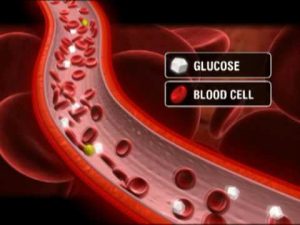
What is Type 1 Diabetes?

Shiatsu Video – 2

All About Body Composition

Hi9 | What is Jaundice? Causes and Treatments – Dr. Kiran K Peddi , Medical Gastroenterologist

Nerveous System And Stress Management Asanas Video – 1

Endocrine System

Pregnancy swelling (edema)

Insulin and Weight loss ➠ How to Control & Lower Insulin Resistance Levels Fat Loss Diabetes Leptin

Top 10 fruits to eat while Breastfeeding

Patients Can Test Blood Sugar Via Smartphones

Vitamins their Sources and Deficiency Diseases